Potential

Practice

Confidence

Perspective

Purpose

ABOUT FRANK

I didn’t always know what I was capable of.

I didn’t always know what I was capable of.

I didn’t always know what I was capable of.

Across classrooms, stages, dining rooms, and mountain trails, I learned that confidence grows through preparation and action, capability is built through practice, and purpose becomes clearer through experience.

Across classrooms, stages, dining rooms, and mountain trails, I learned that confidence grows through preparation and action, capability is built through practice, and purpose becomes clearer through experience.

Scroll to begin

POTENTIAL WASN’T THE SAME AS DIRECTION

POTENTIAL WASN’T THE SAME AS DIRECTION

I was always the student people called smart. I worked hard, earned strong grades, ran cross-country, and helped classmates understand things when they got stuck.

But effort and direction are not the same.

For years, I gave my best to whatever was placed in front of me without asking what I wanted that work to build toward. I knew how to succeed within a path. I had not yet learned how to choose one for myself.

At Clarkson University, I invested deeply in a fraternity and believed we could build something meaningful together. When that experience fell apart, I was disappointed, alone, angry, and uncertain about what came next.

The experience left a void—but it also forced a decision.

I could continue allowing the next available path to choose me, or I could begin choosing where my time, energy, and ability belonged.

See where it started

I STARTED BUILDING CONFIDENCE THROUGH EVIDENCE

I returned to an experience that had always felt meaningful: helping other people grow.

As a peer mentor, I helped first-year students navigate college and recognize what they were capable of. That work didn’t drain me the way some of my technical work did. It restored me.

I began adding responsibilities gradually as my skills and confidence grew. I became a teaching assistant, grader, tour guide, gym employee, student senator, and microplastics researcher. At my busiest, I balanced five paid campus roles while completing two engineering degrees and a history minor.

The fundamentals were not glamorous: sleep, show up, pay attention, begin assignments when they are assigned, ask questions, use office hours, study before the night preceding an exam, and build relationships with people who care about doing well.

I returned to an experience that had always felt meaningful: helping other people grow.

As a peer mentor, I helped first-year students navigate college and recognize what they were capable of. That work didn’t drain me the way some of my technical work did. It restored me.

I began adding responsibilities gradually as my skills and confidence grew. I became a teaching assistant, grader, tour guide, gym employee, student senator, and microplastics researcher. At my busiest, I balanced five paid campus roles while completing two engineering degrees and a history minor.

The fundamentals were not glamorous: sleep, show up, pay attention, begin assignments when they are assigned, ask questions, use office hours, study before the night preceding an exam, and build relationships with people who care about doing well.

Frank and classmates holding Pepsi products beside their professor after winning the Pepsi Challenge in senior design

The Pepsi Challenge: learning unfamiliar process-design software quickly—and producing excellent work under pressure.

Adding chemical engineering created the hardest academic period of my college career. I entered senior design without having taken junior design, and the impostor syndrome was intense. We were designing and simulating chemical processes in ChemSep—work that was completely new to me. I kept asking questions, learning from the people around me, and working through the discomfort. Eventually, my partner and I won the professor’s ‘Pepsi Challenge’ by most consistently completing assignments first while earning the highest marks. The win didn’t make the struggle disappear. It gave me evidence that feeling behind and being incapable were not the same thing.

I graduated in May 2023 with degrees in Chemical and Civil Engineering, a History minor, and a 3.91 GPA.

Those results mattered. But what mattered more was how they were produced: gradually accepting harder challenges, developing better systems, and gaining confidence through evidence.

Vertical portrait of Frank at Clarkson University with blurred yellow flowers in the foreground
Frank walking on campus with two other students

2

Engineering Degrees

1

History Minor

3.91

GPA

9

Paid Campus Roles

The results were visible. The process mattered more.

+

What were the nine roles?

I worked as a peer mentor, tour guide, and campus-gym employee. I taught Calculus III, Differential Equations, and Statics, and graded Thermodynamics, Reinforced Concrete Design, and Geotechnical Engineering II: Soils. I also served as a student senator and contributed to microplastics research that earned me authorship credit.

PREPARATION CHANGED WHAT I BELIEVED WAS POSSIBLE

April 2024

April 2025

During my final semester, I created “Robro,” a playful song about a campus dining hall. Students shared it, it gained traction across campus, and I was eventually invited to perform.

What began as a funny song became an opportunity to open Springfest before a crowd of more than 600 people.

I did not walk onto that stage naturally fearless. I prepared.

I wrote transitions for each song, practiced stories and small dance movements, and rehearsed complete sets alone in my basement with a water bottle as a microphone. I imagined the audience before it existed.

When I slipped immediately after running onstage, I jumped back up and continued. The performance was memorable enough that I was invited back the following April to headline a longer set.

That experience changed my understanding of confidence. Confidence is not something you must possess before acting. It is something you can build through preparation, action, recovery, and repetition.

During my final semester, I created “Robro,” a playful song about a campus dining hall. Students shared it, it gained traction across campus, and I was eventually invited to perform.

What began as a funny song became an opportunity to open Springfest before a crowd of more than 600 people.

I did not walk onto that stage naturally fearless. I prepared.

I wrote transitions for each song, practiced stories and small dance movements, and rehearsed complete sets alone in my basement with a water bottle as a microphone. I imagined the audience before it existed.

When I slipped immediately after running onstage, I jumped back up and continued. The performance was memorable enough that I was invited back the following April to headline a longer set.

That experience changed my understanding of confidence. Confidence is not something you must possess before acting. It is something you can build through preparation, action, recovery, and repetition.

Frank performing on stage beneath a glowing “Frank Unify” display at Springfest

PEOPLE TAUGHT ME WHAT TECHNICAL PROBLEMS COULDN’T

In October 2023, I began substitute teaching in Buffalo Public Schools. I have since worked across grades Pre-K through 12, with most of my experience among fifth- through eighth-grade students.

Young people taught me to communicate clearly, read a room, notice the quiet student, redirect the attention seeker, and relate to different personalities without pretending they were all the same.

Hospitality developed another side of those abilities.

I began serving at Applebee’s in August 2024, became one of the strongest servers within two months, and moved into solo Friday-night bartending shortly after training. At Dave & Buster’s, I handled large parties, sustained rushes, and unpredictable problems that could not be rehearsed in advance.

Engineering taught me structure. Hospitality taught me adaptation.

The goal was not merely to deliver food correctly. It was to understand what each table needed—energy, reassurance, humor, efficiency, or space—and make sure every guest left smiling or laughing at least once.

Technical knowledge can help you solve a defined problem. Emotional intelligence helps you recognize what the real problem is.

In October 2023, I began substitute teaching in Buffalo Public Schools. I have since worked across grades Pre-K through 12, with most of my experience among fifth- through eighth-grade students.

Young people taught me to communicate clearly, read a room, notice the quiet student, redirect the attention seeker, and relate to different personalities without pretending they were all the same.

Hospitality developed another side of those abilities.

I began serving at Applebee’s in August 2024, became one of the strongest servers within two months, and moved into solo Friday-night bartending shortly after training. At Dave & Buster’s, I handled large parties, sustained rushes, and unpredictable problems that could not be rehearsed in advance.

Engineering taught me structure. Hospitality taught me adaptation.

The goal was not merely to deliver food correctly. It was to understand what each table needed—energy, reassurance, humor, efficiency, or space—and make sure every guest left smiling or laughing at least once.

Technical knowledge can help you solve a defined problem. Emotional intelligence helps you recognize what the real problem is.

+

The class that went silent

A student once told a rowdy class, “Talk if you hate Mr. U.” The entire room went silent. It was funny, but it also reflected something important: students responded because they knew I noticed them, respected them, and genuinely enjoyed being there.

+

The most comfortable street corner

At a restaurant, a guest was upset about being seated near the street. I promised to make it the most comfortable street corner possible. The tension lifted, the table relaxed, and they had an excellent meal. Sometimes solving the problem begins by understanding how someone wants to feel.

Frank presenting a bottle of wine at a restaurant table

THE MOUNTAINS MADE THOSE LESSONS REAL

Some of my earliest solo hikes taught me the consequences of being underprepared.

Resilience matters. So does avoiding unnecessary problems through preparation.

The strongest person is not the one who never encounters difficulty. It is the person who can assess what is happening, use the resources available, adjust intelligently, and keep moving.

Some of my earliest solo hikes taught me the consequences of being underprepared.

Resilience matters. So does avoiding unnecessary problems through preparation.

The strongest person is not the one who never encounters difficulty. It is the person who can assess what is happening, use the resources available, adjust intelligently, and keep moving.

Frank overlooking Mount Rainier from a forested viewpoint
Frank at the winter summit of Mount Marcy in the Adirondacks
A hiker approaching a distant snow-capped mountain along the Wonderland Trail

+

Finding the trail

On Mount Marcy in February, ice erased the trail near the summit. I repeatedly searched for the descent while my water began freezing and daylight disappeared. Eventually, I stopped panicking, chose a direction, reassessed, and found the trail.

+

22.5 hours

On another Adirondack trip, missing equipment, navigation errors, and dangerous ice turned four connected peaks into a 22.5-hour ordeal. I finished exhausted, humbled, and far more aware of what preparation truly means.

+

Wonderland

Years later, my brother and I approached the Wonderland Trail differently. We trained with loaded packs, checked our equipment carefully, and prepared to spend seven days in the mountains. When ankle pain appeared before we even reached our first campsite, I adjusted, continued carefully, and completed the trail.

CURIOSITY HELPED MY DIRECTION BECOME CLEARER

Music, teaching, hospitality, improv, Spanish, philosophy, religion, history, and the outdoors may look unrelated.

To me, they are different ways of understanding people and the world they inhabit.

I enter new fields because I love learning, welcome difficult challenges, and want to understand how people with different experiences see the world. Each field gives me another perspective and another set of tools.

But breadth alone is not the goal.

Breadth helps you discover and connect. Depth makes you useful.

Young people should know that investing time in something does not mean it must define them forever. They can explore, reflect, change direction, and carry what they learned into something more meaningful. At the same time, meaningful progress eventually requires choosing where to focus and practicing long enough to become genuinely capable.

Music, teaching, hospitality, improv, Spanish, philosophy, religion, history, and the outdoors may look unrelated.

To me, they are different ways of understanding people and the world they inhabit.

I enter new fields because I love learning, welcome difficult challenges, and want to understand how people with different experiences see the world. Each field gives me another perspective and another set of tools.

But breadth alone is not the goal.

Breadth helps you discover and connect. Depth makes you useful.

Young people should know that investing time in something does not mean it must define them forever. They can explore, reflect, change direction, and carry what they learned into something more meaningful. At the same time, meaningful progress eventually requires choosing where to focus and practicing long enough to become genuinely capable.

  • Frank officiating his father’s wedding
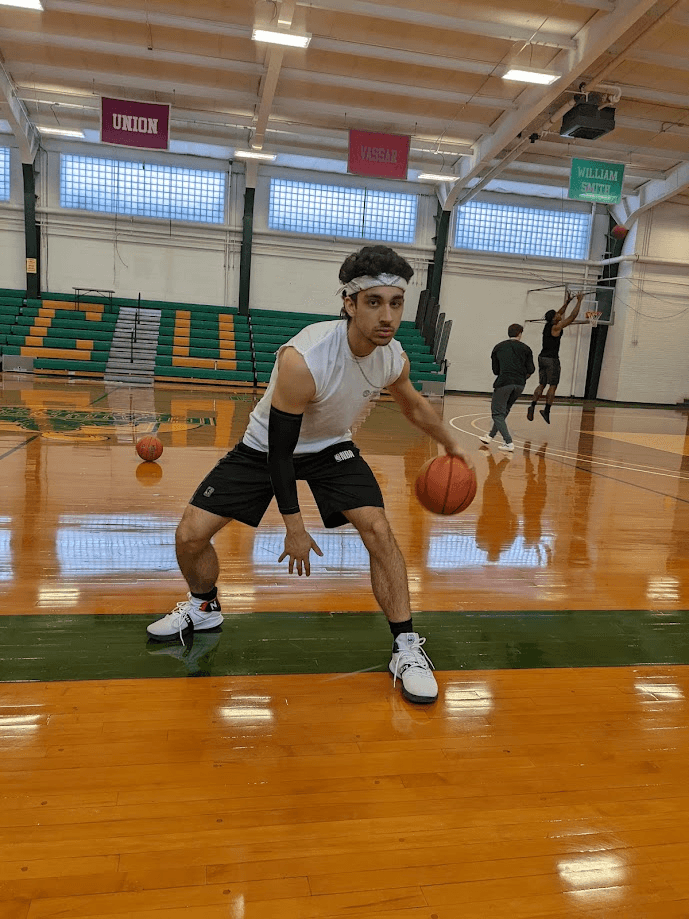
  • Frank playing basketball on an indoor court
  • Frank with a group of friends at a Turkey Trot race
  • Frank standing beneath giant sequoia trees
  • Frank sharing a casual conversation with friends at Clarkson University
  • A distant snow-capped mountain landscape

WHY I BUILT CAPABLE SELF

December 24, 2025

On Christmas Eve 2025, I met a mother at Dave & Buster’s who was worried about her son.

He was intelligent and ambitious, but assignments were started and not completed. He had already been removed from one school and was at risk of losing another opportunity. After hearing about my engineering and teaching background, she arranged for me to meet with him immediately.

I tried systems that had helped me. Some worked briefly. Others never connected.

The deeper issue was not that he lacked instructions. He knew what he was supposed to do. But everyday work felt disconnected from the future he imagined for himself, and difficult tasks threatened the identity he had built around being smart.

Our work expanded beyond assignments. Each week, we explored ideas such as habits, priorities, focus, patience, planning, and responsibility.

The experience reinforced something important: mentorship cannot be reduced to making a teenager comply or finish a worksheet.

Engineering gave me problem-solving and structure. Teaching gave me experience relating to young people. Hospitality taught me to read people and adapt. Performance taught me how preparation creates confidence. The mountains taught me ownership, resilience, and consequences.

Capable Self brings those lessons together.

On Christmas Eve 2025, I met a mother at Dave & Buster’s who was worried about her son.

He was intelligent and ambitious, but assignments were started and not completed. He had already been removed from one school and was at risk of losing another opportunity. After hearing about my engineering and teaching background, she arranged for me to meet with him immediately.

I tried systems that had helped me. Some worked briefly. Others never connected.

The deeper issue was not that he lacked instructions. He knew what he was supposed to do. But everyday work felt disconnected from the future he imagined for himself, and difficult tasks threatened the identity he had built around being smart.

Our work expanded beyond assignments. Each week, we explored ideas such as habits, priorities, focus, patience, planning, and responsibility.

The experience reinforced something important: mentorship cannot be reduced to making a teenager comply or finish a worksheet.

Engineering gave me problem-solving and structure. Teaching gave me experience relating to young people. Hospitality taught me to read people and adapt. Performance taught me how preparation creates confidence. The mountains taught me ownership, resilience, and consequences.

Capable Self brings those lessons together.

I do not simply hand teens a system. I help them define the problem, test an approach, notice what happens, and adjust until they can increasingly solve it themselves.

I do not simply hand teens a system. I help them define the problem, test an approach, notice what happens, and adjust until they can increasingly solve it themselves.

THE GOAL ISN’T DEPENDENCE. IT’S OWNERSHIP.

A capable teen doesn’t need someone to take over their future.

A capable teen doesn’t need someone to take over their future.

A capable teen doesn’t need someone to take over their future.

They may need another trusted person in their corner—someone close enough to relate, far enough ahead to offer perspective, and committed enough to challenge them to act. Capable Self helps teens find meaningful direction, build practical systems, solve problems, follow through, and take greater ownership of what comes next.

They may need another trusted person in their corner—someone close enough to relate, far enough ahead to offer perspective, and committed enough to challenge them to act. Capable Self helps teens find meaningful direction, build practical systems, solve problems, follow through, and take greater ownership of what comes next.